Wine Tastings & Tours

For a tutored wine tasting or an expert guided tour of a wine region contact me via my Facebook page

Friday, 6 September 2013

Wine, Art & Health - Todoroff Winery


The Wine Anarchist has made Bulgaria his base this summer, so here comes another post on another winery he had the pleasure to visit  Todoroff Winery with his friend Vasko of BuyVinaR.  This winery is located in the village of Brezovitsa in the Thracian Plain just on the northern foothills of the Rhodopi Mountains about 20km southeast of Plovdiv in Central Bulgaria.  Bresovitsa used to be quite a famous wine village with a good dozen wineries, however it has declined somewhat with only a handful of those still in existence today, amongst them Todoroff.

The winery itself was founded shortly after WWII and soon went into state ownership with the advent of Communism.  In 1990 under the land reform it was returned to the family of it's former owners, then bought by Ivan Todoroff in 2001.  It became known as Bulgaria's first 'Boutique winery', as Mr. Todoroff worked hard to improve standards, making small parcels of high quality wines under the stewardship of one of the best winemakers of the country from their own 70 ha of vineyards near the village.

Ivan Todoroff himself has come from a musical / arty background, having studied classical music and playing the flute, so he is still keen to combine wine with arts.  Apart from many pieces of art hanging around the premises, the winery regularly sponsors an art competition of young Bulgarian artists, the winners entry featuring on the labels of their 'Gallery' range of wines.


August is generally not the best month to visit a winery, as it is one of the few quiet months in the winemaking calendar and most people are on holiday, so the Wine Anarchist didn't get to meet either the owner nor the winemaker, despite making an appointment in advance, however as the place also doubles up as a hotel and spa resort, there was some staff on hand to take him around.

The old part of the winery contains the library of back vintages as well as their stock of Bulgarian and American which is used for the wines in the Galley series, which spends between 4-6 months in those barrels.  No wines are barrel fermented, just aged in oak for relatively brief periods so as to not mask the terroir characters of thos wines.


The new winery, which was built after Mr. Todoroff took over the winery, contains mostly French oak barriques, which is used to age the wines of the top range called 'Teres'.  These wines are aged for 9-11 months.  Between the 2 cellars is the modern part of the winery full of gleaming stainless steel.


The vineyards are on the flat or north facing gentle slopes, mostly to the east of the village.

The Wine Anarchist and his friends didn't have time to taste the wines on the premises, but they took away some samples to taste later in a restaurant in Plovdiv, while partaking in a good meal and watching some Balkan dancing (more of the latter below).

  • Gallery Muskat 2012: Pale straw, greenish tinges; good aromatic Muskat nose intermingle with typical lemon sherbet; the palate was medium dry, quite full with warm fruit and a touch of spice.  It had a decent length and quite low acidity.  At 13.5% AbV this was definitely a food wine, which would work well with Oriental food, Thai in particular, or Chinese Duck Orange
  • Gallery Sauvignion Blanc 2012: Pale straw in colour; the nose showed overripe gooseberries and ripe apples (Golden Delicious); the palate was a bit confused displaying tropical fruit flavours and bubblegum, the acidity was low and it kind of lacked definition, which the WA would have been hard-pressed to identify as a Sauvignon in a blind tasting.
  • Boutique Mavrud 2012: Mavrud is the speciality of the region, so the WA had high expectations on the 3 that were on offer at this tasting.  The Boutique was medium ruby in colour with a pale rim; the nose displayed blackberry fruit, a pleasant spicy touch combined with eucalyptus;  the palate was warm and rich with dark fruit and warm spice flavours.  Medium in body, the finish was reasonably long and left an overall positive impression.
  • Gallery Mavrud 2012: the next one up the scale was a lot more youthful with a deep ruby colour and purple hues; the nose showed intense ripe blachcurrant fruit, which carried through on the palate, where a touch of oak was also evident and some supportive backbone from the oak.  Long finish and very good indeed.
  • Teres Mavrud Special Selection 2009:  The colour was ruby with a garnet edge, showing first signs of maturity; also maturiy was evident on the nose with notes of leather, violets, sweet herbs, raspeberries and redcurrants; the palate was warm with mature, spicy fruit and eathy notes on a medium finish.  A pleasant wine, which may possibly be just over its peak.
  • Gallery cabernet Sauvignon 2012: Ruby with purple rim; the nose was slightly ethereal, even spirity with hints of water paint and some sudued blackcurrant; the palate displayed some more defined fruit but somewhat separate from the quite aggressive tannins.  It's not terribly well balanced at this moment in time, but might come together with time as evidenced by the 2007 the Wine Anarchist tasted recently and was very elegant and classy indeed.
  • Teres C abernet Sauvignon 2009:  Unfortunately this sample was maderized and almost undrinkable.  Must re-taste it on a different occasion.
As I mentioned the winery also functions as a health spa, where you can bath in grape skins to prevent you getting.  Personally the Wine Anarchist prefers imbibing the stuff, but if this your thing click on the link above.  For availability in the UK contact BuyVinaR.  

And finally as promised some Balkan dancing

<iframe width="420" height="315" src="//www.youtube.com/embed/vAKrZuxPXyQ" frameborder="0" allowfullscreen></iframe>

Oh and a nice little quote by Omar Khayam, which hung at Todoroff Winery:


Monday, 19 August 2013

Liguria da Bere / Liguria to Drink


Every year at the end of June La Spezia hosts the Liguria da Bere, 'Liguria to Drink', event on it's streets.  This year the Wine Anarchist participated once again, as he happened to be on a brief stay at home during his travels (home being 20km from La Spezia).  At this event Liguria showcases the wines it has to offer, as well as some producers who muscled their way in from neighbouring regions of Lunigiana in Northern Tuscany as well as some intruders from other nearby places.

Liguria is the banana-shaped coastal region of Italy in the north-west of the country bordering France.  It's long and narrow and dominated by coastal mountains.  The region is roughly divided in two, with the port city of Genoa separating the two parts.  In wine terms Vermentino is the unifying factor, with this white grape grown on both sides of the divide.  To the west though, another grape variety, related to Vermentino makes interesting whites called Pigato.  Red wines are also made here from local varieties Ormeasco and Rossese.  The eastern part on the other hand is influenced by nearby Tuscany and makes pre-dominantly whites from Vermentino, often blended with Albarola and Bosco as well as some Sangiovese based reds.  The most famous DOC of eastern Liguria is the Cinque Terre, which is also a popular tourist destination.

We started our tasting with one of the much under-represented western Ligurians with the wines of the Azienda Gualtieri.  Unfortunately they didn't have a card with their details on them, nor do they seem to have an internet presence.  However their wines were very pleasant indeed, especially their reds from Ormeasco.  Here are the notes:
  • Pigato 2012: medium straw colour; nice sweet herbal aromas , floral and fresh; the palate had a pleasant tingling sensation with typical notes of white pepper; a little short on the finish perhaps.
  • Vermentino 2012: pale straw, aromas of yeast and fresh bread; softer on the palate with minerally, elegant, racy notes, which seemed almost Riesling-like.  Very good indeed.
  • Ormeasco di Pornassio 'Sciac-Tra' 2012: a rosé made like a white wine from free-run juice; the colour was an almost obscene pink; the nose was not overly aromatic, but showed some dark cherry fruit; the palate was dry with a marked acidity, nicely understated but with a long quite full finish.  This is definitely more of a food wine than a sipping rosé.
  • Ormeasco di Pornassio 2011: Medium purple in colour, paling at the rim; the nose displayed plums, farmyard and leather notes; the palate was warm, spicy and rich with a good tannic backbone, finishing long.  Very good
  • Ormeasco di Pornassio Superiore 2011: Deep ruby colour with a pale rim; The nose showed intense aromas of eukalyptus, farmyard, dark chocolate, liquorice and mulberry; the palate was warm and rich with plenty of spice and almost espresso coffee-like characters.  The finish was huge.  This wine is still young, but its complexity is promising a serious wine years to come
For the eastern part the Wine Anarchist started with a Cinque Terre winery he hadn't previously come across the Societá Semplice Agricola Begasti based in the Cinque Terre village of Monterosso.  The DOC of Cinque Terre only allows for white wines made from Bosco, Albarola and Vermentino, which can be either fermented dry or made from semi-dried grapes to produce a sweet Sciaccetrá.  As the latter is rather expensive and produced in very small quantities, it is not normally freely available to taste, however the Wine Anarchist got to taste the dry white as well as a red, which can only be classed as a Vino da Tavola though.
  • Cinque Terre DOC 2012: This white displayed earthy characters combined with delicate honey notes and some minerally notes; the palate had a touch of spice with warm fruit flavours of peach and almond and a warm, long, mouth-filling finish.
  • Rosso Vino da Tavola: This is made from 50% Merlot, 30% Syrah and 20% Cabernet Sauvignon.  The colour is medium ruby with a pale rim; the nose displays an open fruit reminiscent of elderberries and cherries as well as hints of vanilla; the palate was soft and spicy, with some pleasant and elegant fruit flavours.  
 Inland from the Cinque Terre in the Val di Vara is the village of Sesta Godano which is home to the Azienda Agricola Cornice.  This is not a traditional wine growing region, but this winery has made interesting wine since 2000, as well as olive oil and picking chestnuts and mushrooms.


 They use a mixture of local and international grapes to produce wines of real character:
  • I Piani Liguria di Levante IGT Bianco 2012:  Made from Albarola and Sauvignon Blanc, the colour is medium straw; there are delicate aromas of gooseberry and hawthorn blossoms; on the palate there is more delicate gooseberry fruit combined with some herbal characters. The acidity is a little angular though.
  • Pein 2011 Liguria di Levante IGT Rosso: A blend of 60% Merlot, 35% Syrah and 5% Ciliegiolo, the colour is a deep ruby; the nose displays dark cherries cobined with forest-like damp leave characters; the palate is rich and spicy with some lovely spice and a touch of spice and herbal notes on the finish.  A lovely and rich wine.
  • The Imara 2011 is grown on a higher altitude near the village of Zignago at 500m asl on clay soils.  The blend consists of mostly Merlot with a splash of Cabernet Sauvignon and the local Pollerá.  The colour is deep ruby to almost opaque, the nose was big rich and spicy with underlying dense fruit; the palate was deep, rich and long with hints of chocolate.  This is not your typical soft Merlot, but a real hunk of a wine.  Great wine of real character!
 The 'home DOC' of the Wine Anarchist is the Colli di Luni, which comes in Vermentino, straight Bianco (Vermentino plus other grapes) and Rosso (Sangiovese plus other grapes).  As The WA already knows this area well and should write a separate blog post sometime, he did come across a winery he hadn't known before, the Casa del Frate.  Whilst their speciality is olive oil and renting out holiday apartments on the the pretty island of Palmaria at the entrance to the Gulf of La Spezia, they also produce a little wine at their vineyards in Masignano di Arcola, just around the corner to where the Wine Anarchist himself owns some land.  Their big and full Vermentino Frascoforte 2012 (14% ABV!) displayed a pale greeny gold colour; the nose was big, rich and spicy with notes of gooseberry, whilst the palate was warm and rich, with plenty of acidity to balance the alcohol, finishing very long.  A big wine that could stand up to some serious food.

From the same village the winery of Mésuéto (Via Masignano, 61, 19021 Arcola, tel: 0187 987418) also produced a Vermentino Colli di Luni 2012.  This offering was pale gold in colour; the nose was rich and honeyed with a touch of clove-like spice; the palate carried on in the same vein with some nice apricot fruit and a soft finish.

Of course the Wine Anarchist said hello to his friends at Federici as well, but on this occasion only stopped for a quick glass and chat, as he already knew the wines well and there was so much more to taste.


There were quite a few representative of wineries from the Tuscan side of the Lunigiana, and as they always surprise with their characterful wines made from local varieties.  One of the Wine Anarchist's all-time favourite wineries of that region is the Fattoria Ruschi Noceti (Piazza della Republica, 1 54027 Pontremoli, tel: 0187 830153, e-mail: fr.ruschinoceti@gmail.com).  Here they produce seriously traditional wines from some weird and wonderful grape varieties of the region such as Pollerá, Duralla and Luagda.  Their approach is stubbornly anti-modern, making wines in old barrels designed for ageing and to be paired with the rustic local dishes.
  • Marchesa Caterina Rosé IGT Val di Magra 2012: this deep salmon coloured rosé is made from 70% Pollerá plus a hotchpotch of other local varieties, which may or may not have names.  The nose is of water paints and strawberry and cream; the palate displays more of the same with some interesting herbal notes, a great balancing acidity and some good length.
  • Otto Ottobre Bianco IGT Val di Magra 2011: This blend of the local Durella and Luadga grapes is so named, because it traditionally gets picked around the 8th of October, as both are very late ripening varieties.  The alcohol level usually ends up at around 15% and for a white it is capable to age really well.  The colour of ths offering was medium gold, whilst the palate was rich and honeyed with notes of spice and ripe autumn apples, balanced by some lively acidity; on the palate some residual sugar was evident, but all in all it was very well balanced displaying more of the characteristics of the aromas.  The finish was long.  A beautiful wine, that in the experience of the Wine Anarchist will age gracefully.  In fact he could not resist buying a magnum of the 2007, which he may open for a special occasion.  Watch this space! :)
  • Pollera 2009 IGT Val di Magra: Made from 100% of what is arguably the most exciting grape variety of the region.  The colour was medium ruby, showing some garnet tinge on the edge; the nose and palate consistently are rich in warm herbal characters with notes of liquorice and elderberries; the palate has a big backbone and finishes rich and long.  A great wine, which does not easily fit into any category, but works really well with some wild boar for instance.
  • Bigoncio 2011 IGT Val di Magra.  This is exactly the same wine as the Otto Ottobre, except the fermentation was finished early by fine filtration to result in a medium sweet wine with only 11.5% alcohol (with a further potential alcohol level of 3.5%).  This wine shows far more honeyed characters and some rich marzipan in addition to the flavour profile of the dry version..
Their neighbours in the town of Pontremoli, the Cantine Belmesseri (Via C.S. , Vignola di Pontremoli, tel: 335 7752116), have a more modern approach with a combination of local and international grape varieties on their just 1.6ha of vineyard.  They produce 3 different wines, all very nice.
  • Caras Delicias Bianco IGT Toscana 2012:  This is a blend of 40% Vermentino, 20% Sauvignon Blanc, 20% Durella and 20% Albirola, the colour is medium straw; the nose revealed fresh gooseberry notes as well as herbs such as nrosemary; the palate was fresh, yet rich with some nice yellow plum fruit with a long spicy finish.  A nice quite full wine, which do nicely with a creamy sauce.
  • Belmesseri Rosso Toscana IGT 2010: A blend of 40% Merlot, 30% a mixture of unnamed local varieties, 20% Cabernet Sauvignon, 10% Syrah, this offering had a deep ruby colour; on the nose there was some rich redcurrant fruit, a touch of spice and hints of milk chocolate; The rich fruit carried through on the palate, also incorporating some herbal notes.  A very attractive, lively, modern wine.
  • Tafuri Rosso Toscana IGT 2010:  This blend of 40% Cabernet Sauvignon, 30% Merlot, 20% Merlot, and 10% Pollerá has been aged for 8 months in French barrique.   This is a serious wine deeply coloured; the nose reveals intense herb and spice notes combined with liquorice and elderberry fruit; the palate is dominated by a big tannic backbone, supported by more of the rich fruit and a long chocolatey finish.  Great wine, but still needs a few years in bottle to come around and soften out a bit.
 From the town of Licciana Nardi in the Lunigiana hails Azienda Agricola La Vigna di Manolo Luchini (Loc. La Vigna, Licciana Nardi, tel: 0187 471187, e-mail: manololuchini@libero.it), a small organic producer.  The Wine Anarchist came across them a few years back, but they have gone up a step since then, even if the names of their wines are a little over-elaborate:
  • Amore e Psyche Val di Magra IGT 2012: A blend of 40% Merlot, 60% local grape varieties, including Pollerá, the name does not need translating...  The colour was deep purple; the nose displayed some lovely ripe blackcurrant fruit; the palate was very clean and well defined with some more of that nice fruit balanced by some spice.  A well balanced, long and attractive wine.
  • Diversamente dal Solito IGT Val di Magra 2012.  This translates as 'different from the usual', it is a blend of Syrah, Merlot and local grape varieties (the exact percentages were either not known, or the Wine Anarchist was too drunk, this being the last stand he stopped at).  Unfortunately it seems he was even too drunk to make notes either, but the wine is worth the inclusion for its name alone ;)
 The next edition of Liguria da Bere should be at the end of next June in the centre of La Spezia, if you happen to find yourself in the area and are curious about what Liguria has to offer.

Monday, 5 August 2013

The Wine Village of Sasbachwalden


The Wine Anarchist has traveled the length and breadth of Europe recently and is struggling to keep up with his posts, being constantly on the road.  On his travels he visited his parents in the south-west of Germany and took the opportunity to visit the 'Wine and Flower' village of Sasbachwalden on the north-western edge of the Black Forest as it opens up towards the Rhine Valley with sweeping views across the French border and the Vosge Mountains beyond in the German wine region of Baden.

Ever since the WA's parents moved to that part of the world it became kind of a family tradition to go to Sasbachwalden every now and then, not for the wine. but... for the most amazing Black Forest Gateaux at the Gasthof Hohenrode:
 

14 layers of chocolate and cream doused in kirsch eau de vie, served lying down on a dinner plate, should get anyone knowing what's good for them driving 100km across the mountains!!!

Anyway, always on the lookout for his news hungry readers, the Wine Anarchist also investigated the vineyards and wineries of this most picturesque of wine villages.  Apart from wine (and Black Forest Gateaux) the village is also famous for it's half-timbered houses decorated with an abundance of flowers.


And it is surrounded by vineyards, most famously the location 'Alde Gott', Old God in the local dialect.  If you think of Germany as mostly a white wine country, you'd be surprised that you would find more red wine in this region, which is one of the warmest spots in Germany and Pinot Noir or
Spätburgunder as it is known in Germany, leading the way.


Walking around the small town you can't fail to realise that wine plays a major role.  We strolled through the vineyards.  In the town we learned that the local wine queen also went on to become the national wine queen.


Sasbachwalden is also twinned with the Beaujolais village of Morgon, to which this little monument is dedicated to:


This old large wine press is displayed outside the council offices:


Anyway, it was time to taste some wine.  The Wine Anarchist had previously tasted some wines from the local cooperative and found both Rieslings and Pinot Noir most excellent.  So following his nose he decided to check out one of the smaller producers.  He happened to find the Weingut Richard Vierthaler, a small (7ha) 2nd generation family run operation.  


A very cheerful Richard Vierthaler welcomed us to his premises and a few wines were tasted.  85% of the vineyards are planted with Pinot Noir and it was clearly the strong point of this winery.  However we started with whites, as you do.  

The Rivaner Trocken 2008 had obviously been open for a couple of days and was loosing a little of its typical grapefruit and floral aromas.  The WA declined an offer to have a fresh bottle opened, so it shouldn't be judged to harshly.

Next came the Alde Gott Riesling Kabinett Trocken 2011.  It was quite an elegant dry wine, but with earthy undertones and fairly full-bodied.  

The Alde Gott Badisch Rotgold Kabinett 2011 was a deep-coloured rosé made from Pinot Noir.  The nose displayed pleasant wild strawberry and raspberry nose, but the slightly excessive residual sugar in this wine threw it a little out of balance.

The Alde Gott Spätburgunder Kabinett 2009 Jubilaeumswein was without a shadow of a doubt the star of the tasting.  It was bottled for the 50th anniversary of the company.  Medium bodied with good concentration and great Pinot fruit, starting to show some nice maturity.  It finished long and satisfying and is a great example what Germany can do with this grape variety.  

Noticing that the estate also produced some spirits or 'wasser' as they innocently call them around here, the WA had to taste the 'Topanimbur', a clear spirit distilled from the roots of the Jerusalem artichoke.  It had all the flavours of this divine vegetable, so he was ready to part with some cash to buy a bottle from his new friend Richard.  It turned out that the tasting bottle was the last one in stock, so the WA bought a bottle of Mirabellenwasser instead, an eau de vie made from the mirabelle plum, which was rather good too, full of lively fruit flavours.

Whilst the Wine Anarchist is of the opinion that the wines from the local coop are actually better, this winery and the whole village are definitely worth a visit, if for no other reason than to taste the most fantastic Black Forest Gateaux anywhere (did I mention it before...?).

Should you be planning to visit the area, there is a guided tour of the vineyards organised every first Saturday of the month between May and October at 1pm starting from the Alde Gott Winzer eg in the centre of town.  If you happen to pass this year, there is a big Wine festival or Winzerfest from the 3-6 October 2013.

Finally if you stuck for somewhere to stay, why not sleep in an 8000 litre wine barrel (minus the wine of course) like old Dyonisus. There is a farm above the town offering this unique experience with all mod-cons.

Friday, 5 July 2013

Going (Double) Dutch

Let's face it, when we think of the Netherlands we think of the above: windmills.  Maybe wooden clogs, hallucinogenic drugs sold in coffee shops, cheese... but wine?  Yet the Wine Anarchist recently had some family business to attend to and never one to miss an opportunity to get his taste buds around something different he discovered the wines of his own homeland.  Not only that, he found a village just 15km from where he was staying and where he scattered the ashes of his recently deceased Conspiracy Cousin, that proudly declared itself a wine village.  So naturally he had to investigate further and a casual Sunday afternoon drive took him to the gates of the Colonjes vineyard in the town of Groesbeek, just south of Nijmegen within spitting distance of the German border (unfortunately their website is in Dutch only).


Back in 2000 or so Freek Verhoeven was retiring from his job as head nurse of a hospital and was looking for a hobby.  He bought himself a plot of land and planted vines, as you do.  He was also an amateur athlete and very competitive.  When his first wine managed to get a bronze medal, his competitive nature really came to the fore and he decided to try harder until he got at least a gold medal.  He expanded the vineyard holding to 13.5 ha, installed a modern winery and drafted in the help of his brother Cees.  The results are impressive and gold medals have meanwhile been awarded including at various international competitions.

As Freek (incidentally it's pronounced Frake rather than Freak) is thinking of retiring for a second time he is slowly putting young enologist Adam Dijkstra in charge to continue the project, the latter took out some time to chat to the Wine Anarchist and his family about the vineyards and give them a small tasting.

In total there are 3 plots under vine around the village of Groesbeek, all farmed organically, one directly adjacent to the winery, De Colonjes, which is on slight south slope (yes there are some slopes even in the Netherlands!) on Loess soil,


and the other ones the Knapheide Weg and 't Hof respectively.  The grape varieties are all hybrid varieties and amazingly reds are a bit of specialty of this winery, but they do also produce some excellent rosé, both still and sparkling and some very respectable whites.

On talking with Adam, the Wine Anarchist found a lot in common with him.  They both share an interest not only in organic production methods but also in permaculture and Adam lamented the fact that vine growing is by definition more or less only possible in mono-cultures.  However to counteract this somewhat at Colonjes they interplant the rows of vines with a mixture of some 25 different wild plants including edible ones and ones that fix atmospheric nitrogen into the soil and accumulate nutrients from subsoil levels.  The fact that they use many disease resistant hybrid varieties also eliminates the need for harmful chemicals used in the vineyard.


Tasting the wines the WA was very impressed.  He took a whole sample case with him to re-taste some in the comfort of his or someone else's home during his travels.  He had previously tasted English wines extensively and found that many of them stood out for their aromatic qualities, but this winery's choice of grape varieties was leaning more towards crisp fresh wines.  Here are some of his tasting notes:

Cabernet Blanc 2012: Unfortunately this wine was sold out, except for a few bottles for tasting purposes, as this was definitely the best of the whites.  Pale coloured, the nose displayed some floral, peach blossom notes with hints of freshly mown hay.  The palate had distinct minerally notes, the acidity was well balanced and had some lovely fresh, clean fruit notes.  Very pleasant if a little on the short side.  The Cabernet Blanc grape is a hybrid of Cabernet Sauvignon, plus some other hybrid that according to some may have some Riesling parentage in there somewhere, and indeed it is quite Riesling-like.


Knapse Witte 2012: This is a blend of Helios (a hybrid with Muller Thurgau in its parentage) and Riesel (which also has some Riesling in its ancestry).  The armas display a distinct minerality as well as lemony and herbal characters, such as lemon balm and mint.  The acidity is very marked on this wine and the lemon and mineral notes continue on the palate on a medium finish  The high acidity make this really a food wine, paired with some Dover sole for example.


Johanniter 2011: The Johanniter grape is a hybrid of Riesling combined with some Pinot Gris and Gutedel in its veins.  A noble wine with greenish tinges still on the colour.  The extra year in bottle suits this wine well as it shows some delicate aromas of grapefruit and nice minerally notes.  The palate is flinty with juicy lime fruit and hints of fresh bread.  An elegant wine.


Cabernet Cortis 2009: Cabernet Cortis is crossed between Cabenet Sauvignon and Solaris, which in turn has Riesling and Pinot Gris in its ancestry.  This wine is surprisingly big not showing any signs of ageing yet.  A youthful deep ruby colour with purple fringes promise things to come.  An intense youthful aroma of tobacco, elderberries, blackberries and black pepper is followed by a rich, full palate with quite high acidity and a big tannic backbone with flavours of dark berries such as blackcurrants and vanilla oak notes on a long finish.  Interestingly the wine was aged for 18 months in new 450 litre German oak barrels, which are less invasive in taste compared to French oak.  An impressive wine, which will continue to evolve for at least 5 years in the opinion of the Wine Anarchist.


Regent 2011: This grape variety is a cross of Muller Thurgau, Silvaner and Chambourcin.  The Wine Anarchist forgot to take notes when tasting this wine, but from memory, this was a light coloured wine, light in body, with lovely cherry, raspberry and redcurrant characters combined with some vanilla oak notes and white pepper spice from 8 months ageing in French barriques.  Very pleasant indeed.


Recortis 2011:  A blend of Regent and Cabernet Cortis which was aged for 8 months in French and German oak, 30% of it new.  Again quite a serious red with intense spicy blackberry notes combining with herbal characters.  Medium bodied, the palate displays sweet, ripe fruit with an intense oaky spice and a mouthwatering juicy long finish balanced by a good tannic backbone.


Cuvée Colonjes: a blend of Regent, their very own Cabernet Colonjes and Cabernet Cortis.  This wine has a medium ruby colour with a pale rim.  The nose displays sweet herbal notes, as well as hints of smoky bacon and dark berries.  The palate is quite light with a touch of spice, blackberries and notes of oak,  It's a tad on the short side and a bit one-dimesnsional, however it makes for pleasant easy drinking.


Cuvée Fréderique Rosé 2012: This delightful rosé made from Regent and Cabernet Cortis grapes recently was awarded a gold medal at the Internationale Bioweinpreis in Germany.  The colour is a pale salmon, whilst the nose reveals delicate aromas of rose petals, raspberry and cream.  The palate is dry with a lively acidity yet a creamy texture with slightly flinty notes and some understated, delicate fruit.  Very elegant and good.


Belle de Colonjes NV: The Wine Anarchist was celebrating a happy event at the time so was not making notes again.  This Champagne method pink fizz is produced from the Pinotin grape, which presumably has some Pinot parentage.  It's light and fresh with lovely berry fruits and a good persistent mousse and a long finish.


The wines are priced between 10 and 20 Euros (the latter for the sparkling wine) and are available directly from the winery as well as number of shops across the Netherlands.  The winery is open to visitors at any time, although they are thinking of possibly introducing opening times.  English is spoken.  Tours for groups can be arranged in advance.  There are also a number of events making a visit worth it such as Open Days or the Groesbeek Wine Festival from the 28th-30th September this year.

Contact details are:

Colonjes
2de Colonjes 4
6562 DM Groesbeek
Tel: +31 (0)24-3973754

Friday, 21 June 2013

Not Only Wine - Kanaal Belgian Beer Bar


The Wine Anarchist does not exclusively drink wine, no he has also been known to partake in sipping a nice cool beer or some other beverage.  There are a variety of countries claiming to produce the best beers in the world, the Czech Republic and Germany being strong contenders, but none match Belgium for variety, so the Wine Anarchist was only too glad to accept an invitation to the opening of a beer garden at the Kanaal Bar in Sofia, Bulgaria.


The barman and owner, whose name escaped the WA as he was indulging in the beers on offer opened this trendy place on 2 Madrid Boulevard a bit over a year ago, trying to offer the inhabitants of Bulgaria's capital (the Sofians...?) something a little different.  Most of the beers are imported directly and there is a list of some 50 mostly Belgian beers. 

Now running a relatively upmarket bar in Sofia is not easy in a country where average wages are around 350 Euro a month, so to the western visitor drinking at the Kanaal is a bargain.  House beers are Grolsch and Hoegaarden at 2.50 Leva and 3.50 Leva respectively per bottle (1.25 and 1.75 Euro!).  A popular drink is their own recipe of what they call a radler, a shandy to you, me and the Wine Anarchist: a little grenadine, a bottle of Hoegaarden, top up with some orange juice (if the WA followed this correctly in his slightly drunk state.  With these basic drinks at low prices it is perfectly possible to have a most enjoyable evening without breaking the bank.

If on the other hand you want to try something different, it will obviously cost you a bit more, but prices still compare favourable to the rest of Europe.  Specialist beers include Chimay Blue, Westmalle Dubbel and Trippel, Liefmans and Giradins Kriek (cherry beers), Duvel, Petrus Dubbel Bruin, Oud Bruin and Aged Pale, Rodenbach Grand Cru, La Trappe Quadrupel, Rochefort 8 and others.  A good mixture of well known Belgian beers as well as some more exotic ones.  As usual with Belgian beers, one has to be a little careful when inbibing as many of them are deceptively strong, but boy are they delicious!

In addition the spirit selection is equally eccentric and unusual, where clearly a lot of thought (and extensive tasting) has gone into.  Gems on the spirit shelf include instead of the usual suspects Tyrconnel Irish Malt Whisky, Glenfarclas 15 year old and Heritage Scotch Malt whisky (one of the few independent whisky distillers in Scotland), Monkey Shoulder Scotch Whisky, Wenneker Old Dutch Genever, Hendrick's handcrafted Scottish gin, Black Forest raspberry eau de vie, Italian blueberry and liquorice liqueurs.  Unfortunately the Wine Anarchist did not have the stamina to drink himself through the selection, but that should be a good excuse to come back.


The clientele is mostly young, but the slightly ageing WA did not feel out of place.  The decor is modern and clean and there now is a small garden to relax in.  The staff are friendly and they speak English.  Definitely a place to come back to and highly recommended if you find yourself in Sofia.

Kanaal Bar & Hostel
2 Madrid Boulevard
Sofia

Tuesday, 28 May 2013

A Random Selection of Bulgaria

Let's start with a few facts that you probably didn't know about Bulgarian wines.  We all remember the 1980's early 90's when Bulgarian Cabernet was cheap and cheerful, the wine of choice for those strapped for cash.  They had started on the varietal labelling before the Australians and Californians had thought of it and they flooded the market with gluts of very drinkable low price wines, particularly reds.  The reason they could do that was that the whole industry at the time was state owned and subsidised by the Communists to bring in much needed hard currency. 

But what happened before or after?  Well long before, very long before, the Thracians invaded the territory of what is now Bulgaria and made themselves at home there.  This ancient tribe, that never managed the basics of reading and writing, were famous for 2 things: they were fierce fighters and they loved their booze.  So they introduced viticulture to the region well before even the Greeks and Romans had thought of that, in fact the latter were still busy wielding wooden clubs and crawling out of caves.  Bulgaria can therefore claim to be one of the cradles of winemaking alongside Georgia and Armenia, something not many people are aware of. 

Wine production continued to flourish as the Greeks and Romans invaded respectively, but then the 15th century came along and with it the Turks, Muslims of course, who weren't very keen on wine for some unknown and unfathomable reason.  So viticulture went into decline and never fully recovered, until now... perhaps... 

Well the Wine Anarchist has set out to find out more about the current state of the wine industry in Bulgaria.  After the fall of Communism the land formerly nationalised was redistributed to it's former owners, a slow and messy process.  Some native varieties have miraculously survived centuries of neglect, such as Melnik, Mavrud, Gamza and new money started pouring in, but the country is still poor and infrastructure isn't what you'd expect of a member of the EU.  People are starting to find their feet again and wine producers are finding it hard to compete in a market that still remembers the cheap offerings from a couple of decades ago, but the potential for quality wine is clearly there as the WA discovered on his visit to Borovitza.

To find out a bit more the Wine Anarchist went into a large supermarket and selected a random selection of Bulgarian wines from the shelves and tested them.  This is a totally unscientific sampling, all made from international grape varieties, that should give some idea of what is now produced.  Here are the results of the experiment:

Leva Winemaker's Selection Sauvignon Blanc 2010 Rose Valley:  This wine, according to their web-site, apparently won the 'Golden Rython' Prize, which the WA has never heard of either.  The colour is a pale straw; the nose has notes of green apples and nettles; the palate is well defined with crisp fresh apple notes, hints of cloves and minerals.  A very elegant wine in the Loire style with a long elegant finish and nice fruit characters.  Jolly nice value at BGN 6.75*


600 Sauvignon Blanc 2011 'No Man's Land' Danubian Plain, Damianitza Winery
 The No Man's Land brand is apparently because the winery own vineyards in the former no-go zone near the Turkish border, but this offering comes from the north of the country.  The 600 in the name is not explained...  The wine is very pale straw; the nose displays green gooseberries and some minerally, flinty notes; on the palate we found fresh zesty lime fruit and steely notes.  Perhaps a bit mean, lacking real fruit, neither having huge complexity or length.  It came in a gift pack with a 1/2 bottle of Buteo Cabernet Sauvignon from the same company, together costing BGN13.65


 Buteo Cabernet Sauvignon 2008, 'No Man's Land' Thracian Valley
70% of this wine have been matured for 10 months in French barrique.  The colour is medium ruby with a garnet rim, showing it's age; the bouquet has herbal qualities, including eucalyptus reminiscent of cough sweets, combined with hints of cow manure and sweet redcurrants; whilst this may not sound too appealing the palate was complex with more slightly medicinal characters and a soft yet firm structure and a good length.  A wine definitely at the peak of it's development and good drinking if you like mature wines.  Note: this wine was out of a half bottle and therefore be a bit more advanced in its development.
Junior Merlot Tempranillo 2012 'Young Wine' Katazyna Vineyards, PGI Thracian Valley: This was obviously an attempt to emulate a Rioja Joven and had caught the WA's eye for that reason, however he was to be disappointed: The colour was medium purplish and the nose was quite promising with intense ripe and lush fruit of elderberries, plums, cinnamon and stewed figs; however the palate was dominated by the high alcohol levels, giving a burning sensation (14.5%); the very soft acidity and lack of tannin failed to offer a balance to the alcohol and it finished on an unpleasant bitter note.  Altogether a badly balanced wine and not worth the BGN8.55.  The WA did not even manage to finish the bottle, a rare occasion for him!


 Edoardo Miroglio Cabernet Franc 2010 PGI Thracian Valley.  Now if this sounds a bit Italian, it's because the owner IS Italian Edoardo has actually come into wine via the textile industry, which, forgive the WA's cynicism, was probably a way to invest his money safe from the Italian tax authorities.  However the wine isn't so bad at all!  The colour is medium ruby; intense, lush notes of ripe blueberry, freshly mown hay and plums pervade the attractive aromas; the palate is soft and rounded with some gorgeous fruit finishing long on hints of liquorice, vanilla, spice and chocolate.  A really pleasant, easy drinking wine.  In fact the WA is sipping on some of it as he writes these lines and enjoying it immensely.  BGN 12.99


 Dominant 2009 Castra Rubra (Syrah/Cabernet), Tharcian Valley.  Made from organic grapes under the supervision of French winemaker Michel Rolland.
This was definitely the highlight of the tasting.  A deep ruby colour was followed by an intense and complex nose of liquorice, black pepper, brambles, violets, lilac and dark chocolate; the palate was rich and full-bodied, displaying spicy notes, more liquorice and blackberry with a fair backbone balanced by some lovely juicy fruit.  Long, complex, very good indeed, giving many an Australian Shiraz a run for is money, but at a fairly hefty BGN17.49

In conclusion it must be said that Bulgaria certainly has the potential to produce world class wine, but seems to be struggling to find its new identity again.  On a future occasion the WA is planning a tasting of indigenous grape varieties, which surely should be the strength of what this country can produce

*BGN (Bulgaria Leva) converts to about €0.50


Monday, 20 May 2013

Borovitza Winery, North-Western Bulgaria


 On his travels the Wine Anarchist had the great pleasure of being the guest of Ognyan (Ogi) Tzetanov and his partner Adriana at the Borovitza winery near Belogradchik in north-western Bulgaria (They don't actually have a proper web-site, but check out their Facebook page too).  The region is famed for its bizzarly shaped red rock formations that litter the countryside for over 30km, the highlight of which is the Belogradchik fortress pictured above, which is nestled into the rocks for extra natural protection. 

It is listed as a UNESCO World Heritage site, so you would be expecting this place to attract a large, numbers of tourists, yet although it was a main holiday time for Bulgarians with May Day,Orthdox Easter and the National Holiday all falling in the same week, it was remarkably quiet.  Yes of course we weren'y alone, but this area is ranks as the poorest region within the European Union, despite al the tourist poential, not to mention... potential to make world class wines!  And that's of course what we are here to talk about!

The Wine Anarchist had previously visited this winery back in November 2012, but the weather was grey and foggy and he didn't get to see anything of the rocks or the vineyards and also he was suffering from a stinking cold at the time, so missed out tasting some of the gems on offer.  On this occasion he got to see one of the outlying vineyards in the village of Gradetz, some 50km north of the winery, near the Danube river on the border to Romania and Serbia.


This partcular plot is planted mosty with Pinot Noir and Chardonnay as well as a little Sauvignon Gris, a rare varient of Sauvignon Blanc which has a pink-hued skin and is even more aromatic than its white cousin. 

Now at this point it might be a good time explain some of Ogi Tzetanov'sapproach to wine making.  During the Communist era, Ogi worked as a microbiologist at the National Research Institute in Sofia, so he knows a thing or two about the chemistry of it all.  He has also spent some time in California, where he widened his experience and world view.  It shows his ... how shall we put it ... excentric, quirky, plain odd? ... nature that he chose to buy a run-down winery in the poorest part of Europe back in 2004 to try and make boutique wines here.  And there is no other way of describing his wines.  He makes dozens of small to tiny parcels of wine, each different and individual.  Some parcels are as small as a dozen... 20 bottles, if, as he puts it, the wine deserves its individual expression and attention.


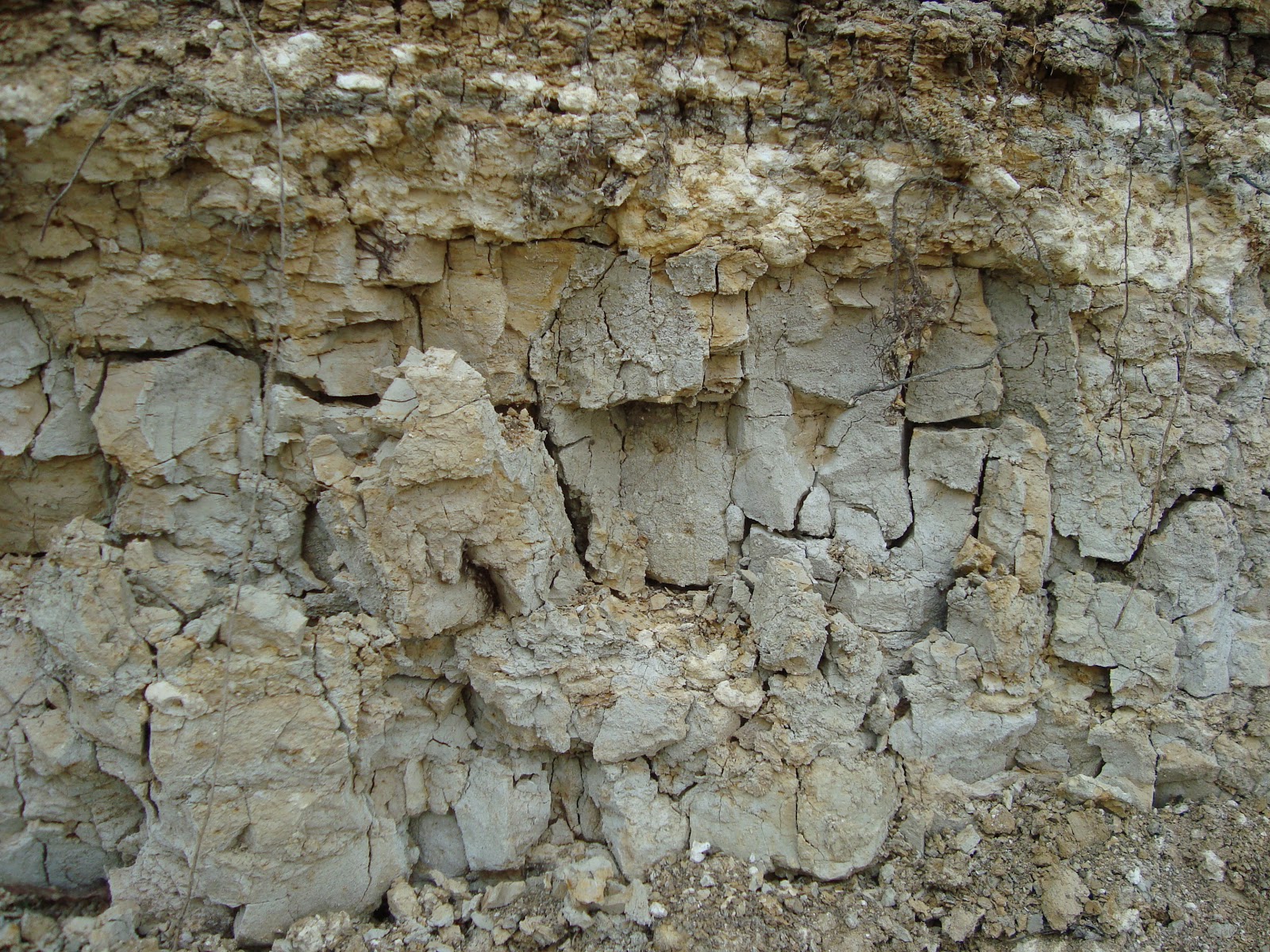
Now back to the Gradetz vineyard, much of it got killed off during the catastrophic frosts of 2010/11, and is only slowly recovering.  It is gently south sloping (so away from the river Danube which lies to the north) and pure limestone subsoils, similar, in fact almost identical , to those of the Champagne region in France.  Here is a nice profile picture of the soil at Ch. de Val, which right next door to Ogi's vineyard.


One of the wines made at this site is the excellent Cuvée Cadeau Pinot Noir.  The WA didn't get around to making any tasting notes this time, but he liked the firm structure of this wine with well integrated Pinot fruit.  He did get to taste a barrel sample of the 2010 Chardonnay from this vineyard too though, which despite 2 1/2 years in barrel still displayed remarkably fresh pineapple fruit together with some herby nettle notes.  The texture was soft, creamy and rich with a long spicy finish.

 Yes and talking of barrel samples, the WA and his companions Vasko from BuyVinaR, his wife and his dog, were treated to a sampling of quite a few things directly from the barrels as Ogi went around with his 'thief' to delight his guests.


As the WA and Vasko almost always differ when it comes to tasting notes, heated discussion soon ensued about which was the better Chardonnay or Pinot Noir, each competitively blending their respective favourites to come up with better results, suggesting to turn this one to a sparkling wine, blended with a bit of that one, until he was completely confused as to what he actually had in his various glasses that accumulated in front of him.

Anyway to give you some idea, here are at least some of the notes he took before confusion started to reign:

  • Marsanne/Roussanne/Viognier 2012: Aromatic and fresh yellow fruit, touch of spice, warm and full; lovely fruit with apricot stones and a slight almondy finish.  Very nice indeed.
  • Incidentally he took a bottle of the 2011 of the same wine with him to taste and these are his impressions on tasting this wine at a later date: Medium straw colour; some aromatic peaches coming through, hints of banana skin, but more of the almond notes on this one as well as some mineral quality and less fresh as the 2012; full-bodied, with more of the peach fruit coming through and a long spicy finish.  
  • Cuvée Borovitza Chardonnay/Sauvignon Blanc: Yeasty, bready nose; soft, a bit tart on the finish, but kind of lacking fruit
  • Pinot Noir Chardonnay (base wine for sparkling wine): Plenty of Pinot fruit, high acidity, long and elegant.  It shold turn out to be in the Louis Roederer style, which is very much to the Wine Anarchists liking.
  • Pinot Noir Rosé: Pale pink; a nose of raspberries and water paints; intense sweet strawberry fruit on the palate with a crea, mouth-waterring texture with a long finish.  Very nice indeed.
The majority of the vineyards are actually around the village of Borovitza, where they own some 7.5 ha.


 Other bottled wines tasted on this occasion were:

  • Borovitza White Cuvée 2010: Medium straw colour; a slightly mature stalky nose of damp hay and nutmeg; the palate is soft, smooth with some baked apple notes and some more of that nutmeg-like spice and even a touch of anise.  Pleasant enough, but previously the WA had tasted the fresher 2012 which was much fresher and more aromatic, showing plenty of Muscat fruit.  The wine is a blend of Chardonnay and Muskat.  
  • Borovitza Gamza 2010, Great Terroir Range:  Gamza is one of Bulgaria's indigenous grape varieties and is widely considered their answer to the Gamay of Beaujolais, i.e. good for making light, easy drinking reds.  This example comes from a vineyard with sandy clay soils planted with 39 year old vines, the wine was then aged for 2 years in oak.  The result is a wine with a light ruby colour; a bouquet of blackberries and forest floor / damp leaves.  The palate light and soft with hints of spice and some gorgeous mouthwatering fruit reminiscent of blackberries and sweet plums, finishing long.  Pleasant easy drinking, but enough character to keep up the interest.
  • Borovitza Bouquet 2011, Great Terroir Range: Bouquet is a grape variety bred in Bulgaria as a cross of the indigenous Mavrud and Pinot Noir, kind of Bulgaria's answer to Pinotage.  This particular example has been matured in oak for 16 months.  The cross seems to have inherited more from it's Mavrud parentage with a deep purple colour; a rich and fruity nose of blackberries and blackcurrants; The palate displays a lively acidity and slightly tart ripe berry fruit flavours, particularly fruit of the forest and ribena-like blackcurrants.  It is a lovely easy drinking wine with a long and pleasant finish.
  • Sensum 2008: An appropriately named Cabernet/Merlot blend (75/25), this wine still has a vibrant deep purple colour and an intense nose of blackcurrants and lead-pencil sharpening, not unlike a good Margaux in a ripe vintage.  There also hints of sweet violets detectable.  The palate brings out intense spicy, ripe and appealing fruit flavours, which is drinking really nicely at this stage, finishing long on hints of liquorice.  An absolute stunner this one!
  • Borovitza Merlot Pepper Garden 2009.  This wine is made from very old vines (55 years old) grown on clay gravel soils and matured for 3 years in Bulgarian and American barrique.  The colour is deep ruby, but showing signs of maturity towards the rim; the nose displays intense blackberry and plum fruit with distinct black pepper and vanilla notes; the palate  brings out some warm herbal and spicy notes of thyme and black pepper and the lovely warm fruit is well balanced by a firm structure; he finish is long with hints of liquorice and plenty of spice.  A wine of great intensity and complexity.
Where can I get hold of these wines I hear you ask.  Well you can either come on holiday in this stunningly beautiful region and pop into the winery, taste your way around, and if you like something snap it up imediately, because next time it's likely to be gone.  Alternatively, if you live in the UK, contact the Wine Anarchist's good friend Vasko Rachkov, who imports some these gems.  Currently he does not have a web-site (yet), but you can contact him via his Facebook page.